


U.S. manufacturing slows
Manufacturing grew for the 24th consecutive month, but at a slower pace than previous months, according to Institute for Supply Management.
The PMI registered 50.9 percent, a decrease of 4.4 percentage points when compared to June's reading of 55.3 percent. The PMI registered the lowest reading since July 2009, when it registered 49 percent. A reading above 50 percent indicates that the manufacturing economy is generally expanding; below 50 percent indicates that it is generally contracting.
"Production and employment also showed continued growth in July, but at slower rates than in June," said Bradley J. Holcomb, chair of the Institute for Supply Management Manufacturing Business Survey Committee.
"The New Orders Index registered 49.2 percent, indicating contraction for the first time since June of 2009, when it registered 48.9 percent. The rate of increase in prices slowed for the third consecutive month, dropping 9 percentage points in July to 59 percent. In the last three months combined, the Prices Index has declined by 26.5 percentage points, dropping from 85.5 percent in April to 59 percent in July. Despite relief in pricing, however, several comments suggest a slowdown in domestic demand in the short term, while export orders continue to remain strong."
Daniel J. Meckstroth, chief economist for the Manufacturers Alliance/MAPI, said the pace of growth has nearly flattened since the early part of the year.
"Some of the late spring and early summer doldrums were caused by supply chain issues related to getting automotive and semiconductor imports from Japan, and transportation delays due to spring flooding in the Midwest," he said. "But the underlying problem is that the economy is growing very slowly. GDP was nearly unchanged in the first quarter (0.4 percent) and grew only at a 1.3 percent annual rate in the second quarter of 2011.
Still, he thinks the numbers will improve.
"Although the ISM report is gloomy, we expect manufacturing activity to improve. Motor vehicle production schedules are increasing as parts are more available and inventories remain low. In addition, business equipment spending has been, and is expected to remain, relatively strong. Profits are high and firms are willing to invest to upgrade their operations to take advantage of accelerated depreciation."

INDUSTRIAL SUPPLY MAGAZINE




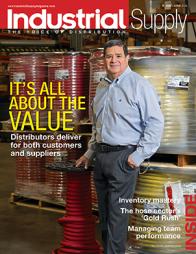
The May/June issue of Industrial Supply magazine features an in-depth cover story about GHX Industrial. Plus, we're featuring articles by contributing writers Dr. Bharani Nagarathnam and Frank Hurtte, as well as interviews with numerous product and distribution industry experts.